

AI-Powered Commercial Security Cameras:
Real-Time Threat Detection for Nebraska and Iowa
Omaha Security Cameras deploys NDAA-compliant AI video surveillance with edge-based video analytics, license plate recognition, and active deterrence for commercial properties
across Nebraska and Iowa.
Our AI cameras detect specific events
perimeter breach, loitering, vehicle intrusion, unauthorized access and alert your team in real time.
Installed since 1998. Over 1,000 commercial deployments across Nebraska and Iowa.
What AI Video Analytics Actually Does on Commercial Properties
AI video analytics converts passive camera footage into real-time operational intelligence. Our deployed systems process every frame at the camera edge, classifying each object,person,vehicle,animal,package,license plate and tagging it with metadata including direction of travel, dwell time, and zone location. That structured data then runs against rule sets configured for your property.
A package left in a doorway after hours generates an alert. A vehicle entering through the wrong gate triggers LPR logging and an access control denial. A person loitering in a restricted zone activates on-camera speakers and strobe deterrence.
None of this requires a human staring at a monitor.
The commercial properties in Omaha, Lincoln, Des Moines, and across the I-80 corridor that deploy AI surveillance share one trait: they cannot afford missed incidents. Multi-site property managers running 5 to 20+ buildings cannot station a human monitor at every feed. Industrial operators with equipment yards cannot rely on motion detection that fires on every raccoon. Enterprise facilities cannot accept a false alarm rate that trains the security team to ignore the alert stream. AI solves those operational problems directly.
Our standard AI deployment stack includes 4K NDAA-compliant IP cameras as primary platforms, edge-based video content analytics (VCA) processing, license plate recognition on vehicle entry and exit points, active deterrence on perimeter and high-risk zones, and integration with cloud-based access control for automated response.Every camera we install includes edge AI capability as standard not as a premium upgrade.
Every system is built for 30-day minimum retention with optional cloud backup for compliance-driven environments.
What sets a commercial AI surveillance deployment apart from a consumer camera kit is integration discipline. Our systems arrive with shop drawings, field-of-view simulations, device lists, and connection diagrams before the first camera hits the wall.
Every deployment is documented to zero-defect handover standards. Every system is owned by the customer outright no subscription traps, no mandatory cloud contracts, no per-camera monthly fees. When Omaha commercial property operators ask who installs AI cameras that actually work without creating a second operational headache, we are the answer they were looking for.
FAQs
Common questions about AI-powered commercial video surveillance in Omaha, Lincoln, and the I-80 corridor.
AI security cameras analyze video feeds in real time at the camera edge, distinguishing between humans, vehicles, animals, and objects before sending alerts. Instead of passive recording, our NDAA-compliant AI cameras apply rule-based detection to identify specific events — perimeter breach, loitering, unauthorized vehicle entry, abandoned objects, safety compliance gaps — and route structured alerts to your team within seconds. Edge-based processing eliminates cloud dependency and reduces false alarms by up to 90% compared to traditional motion detection. We deploy this technology across commercial properties in Omaha, Lincoln, Des Moines, and throughout the I-80 corridor.
Our AI surveillance platforms detect people,vehicles, and license plates; track movement across defined zones; flagloitering in restricted areas; identify perimeter crossings at configuredboundaries; spot abandoned or removed objects; recognize PPE compliance onindustrial sites; track occupancy and queue lengths; detect after-hours vehicleintrusion; and identify fall events in healthcare or hospitality environments.Every detection generates a structured alert with timestamp, zone, objectclass, and verification snapshot. Alerts can be routed to email, SMS, mobileapp, or integrated with access control for automated response.
Traditional motion detection cannot distinguish between a person, a swaying tree, an animal, or changing light conditions —producing constant false alarms that trainsecurity teams to ignore the alert stream. AI surveillance uses object classification and behavioral rules to validate detections across multiple frames before firing an alert. Industry research documents false alarm reductions of up to 90% when AI video analytics replaces basic motion detection. For Omaha commercial operators, this means your team responds to real events instead of wasting shifts checking nothing.
License Plate Recognition uses AI cameras positioned at vehicle entry and exit points to capture, read, and log every license plate passing the coverage zone. Plate numbers are stored with timestamps, directionality, and optional image verification. LPR supports whitelist and blacklist operation — approved vehicles trigger gate opening automatically, blacklisted vehicles generate instant alerts. Common commercial applications in our Nebraska and Iowa territory include grain elevator truck lane management, apartment complex parking enforcement, industrial yard access control, and logistics facility vehicle logging. LPR integrates with cloud-based access control for automated vehicle credentialing.
Yes. Every event detected by our AI cameras cantrigger downstream actions across your integrated security platform. Detectedperimeter breach can trigger access control lockdown. LPR-flagged vehicles cantrigger access control denial at the gate. Loitering in a restricted zone canactivate on-camera speakers and strobe deterrents. Object classification alertscan route to the same platform your alarm system reports to, creating a unifiedincident record. OSC installs systems designed as a single integrated platformfrom day one — not camera, access control, and alarm as three disconnectedproducts.
Still have questions?
We're here to help you with any inquiries.
Three AI Capabilities That Stop Loss

AI Smart Search:
Find Footage in Seconds
Instead of scrubbing through hours of recording, AI metadata tags every detection. Search by person, vehicle, color, direction,license plate, or face.
Find the clip that matters in seconds.

Active Deterrence:
Stop Theft Before Contact
On-camera speakers and strobes activate automatically when AI detects intrusion. Most theft attempts stop when the camera speaks.
Proven deterrent for commercial perimeters, equipment yards, and MDU properties.
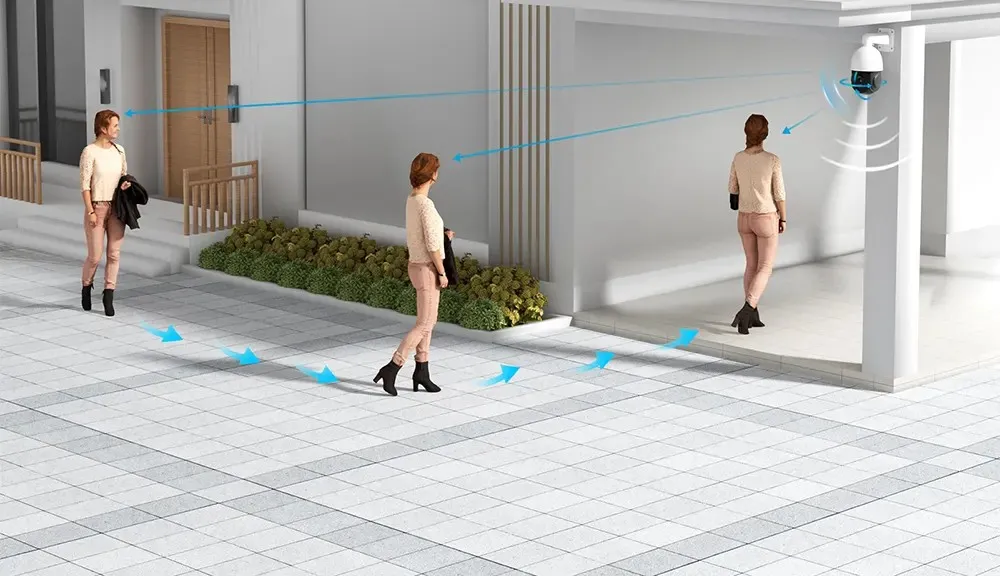
Auto-Tracking PTZ:
Follow the Threat Automatically
AI-powered pan-tilt-zoom cameras automatically track and zoom on detected subjects as they move through the scene.
Real-time threat following without a human operator at the joystick.
Real Deployment
Track Record
Across Nebraska and Iowa
Years Installing Commercial Security in the Midwest
Commercial Systems Deployed Across Nebraska & Iowa Since 1998
Standard Resolution on Every AI Deployment — NDAA Compliant
Facial Recognition Accuracy on Enterprise Platforms We Install